
On The Journey From Personalization to One-to-One Marketing
by Vish Ramkissoon | Thought Leadership
Part One: The Marketers’ Challenge
For years, one-to-one marketing has been one of our industry’s most persistent ambitions. And today, many organizations believe they are already delivering it. They have customer data platforms, sophisticated audiences, personalized emails and websites, propensity models, dynamic creative and next-best-action tools. Now, generative AI is making it possible to produce more variations of content than ever before.
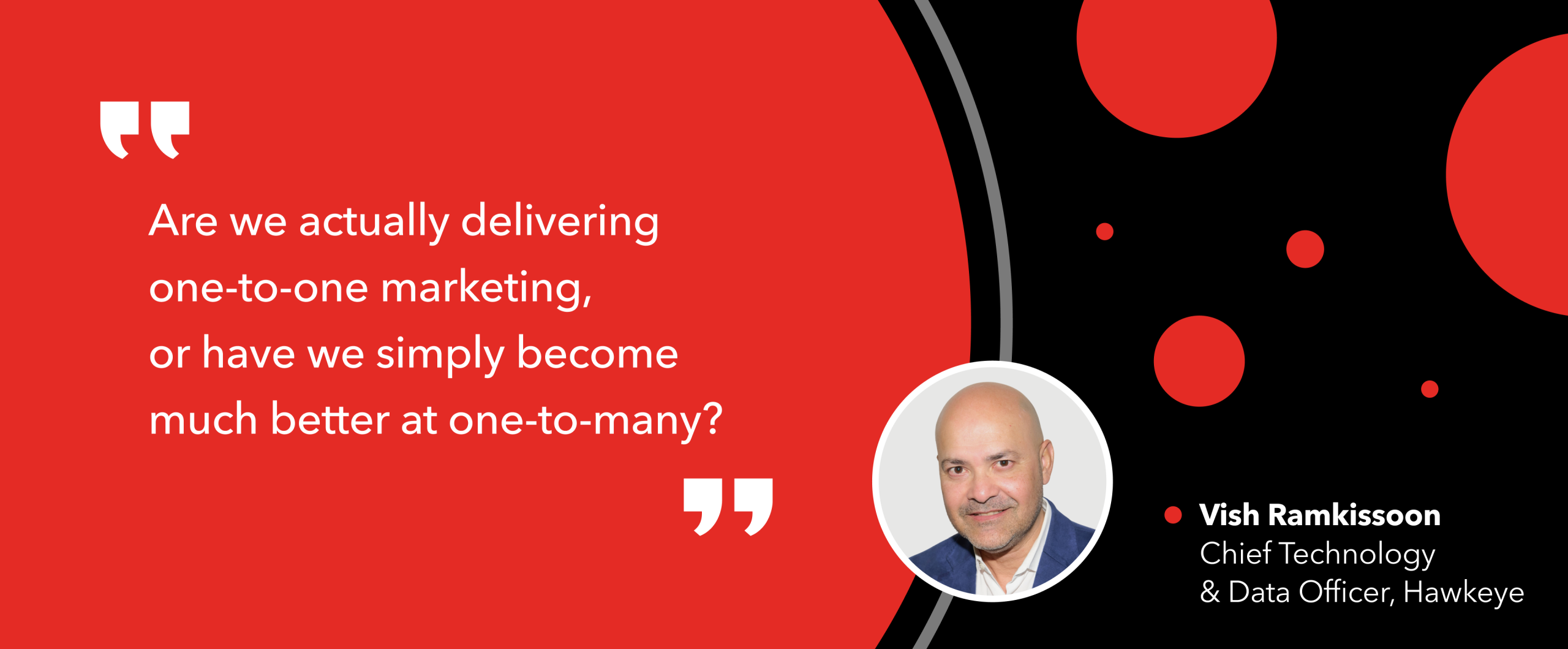
But there is a critical question marketers need to ask: are we actually delivering one-to-one marketing, or have we simply become much better at one-to-many?
The gap before the next leap forward.
For most organizations, there is still a significant gap between personalization and individualization. Personalization often means placing customers into increasingly smaller and more precise segments, selecting from predefined messages, or recommending the next likely product. These capabilities are valuable, of course, but they do not necessarily amount to individualized orchestration.
One-to-one marketing sets a meaningfully higher bar. It requires an organization to understand an individual’s context and intent, determine what the brand should say or do for that person at that moment, and carry that understanding consistently across channels. It changes the central marketing question from “Which customers should receive this campaign?” to “What should we do next for this customer?”
The missing ingredient to real growth.
The cost of failing to make that shift is significant. One-to-many marketing wastes money by speaking to people who are not interested, promoting products they have already purchased, offering incentives to customers who would have converted anyway, or delivering messages that do not reflect where someone is in their journey. At enterprise scale, those small inefficiencies become expensive in media, incentives, content production and customer attention.
The larger cost, however, is missed growth. Individualization allows marketers to make better decisions about each customer: who needs an offer, who would purchase without one, who needs reassurance rather than promotion, who is showing signs of churn, and where the next interaction could increase lifetime value. Remaining one-to-many does not simply mean communicating less effectively. It means leaving customer lifetime value on the table while often paying more to do it.
Want to move beyond personalization toward individualization? Email me at vish.ramkissoon@publicisna.com
Up Next: The Reality We’re Facing
Vish Ramkissoon is Chief Technology and Data Officer at Hawkeye. He’s spent 25+ years helping leading brands refine their customer orchestration models to achieve greater success in their marketing efforts.
